Now I know that a lot of people might be boooooooooooooooored with me going on about that outdated feminism thing, some so much so that they have begun claiming that feminism doesn't exist if I bring it up at the dinner table in an effort to wind me up into silence, but here's a thought I had as a teacher today...
Secondary school is a time where young people learn a great deal. Before they learn a great deal, teachers have a lot of fun times inside their heads being amused by what they don't already know and by the ways they express themselves. This week, a 14 year old boy shouted at his friend in one of those awkwardly loud voices at the precise moment when everyone in the class did 'thinking faces' in silence rather than 'discussion voices' to create general hubbub: 'because rabbits are bigger than chickens!'. Another child shouted, near-hysterically at a group member across the table: 'I know what you're trying to say but it's so difficult to say it in words!' Yet another confidently told me (having watched the entire movie, completed many comprehension quizzes and spent six weeks studying) in a levelled assessment that half way through the play, Juliet decides to break up with Romeo to do what's best for her family. And today, a young man looked at a piece of scrap paper I had given him with a quiz printed on one side, showed me the mumbo jumbo on the scrap side and said, 'sorry, what am I supposed to do with this?' We did a workshop on how to turn a piece of paper over, and it was like the Age of Enlightenment had dawned in his teenage world.
Young people are so wonderful and I am very privileged to work with them, but what's true is that between the ages of 11 and 18, they still don't know what to do when their laptop battery dies when they are sitting next to a plug socket, they need clear explanations as to why 'little rolled clusters, like sausages' is a sexual innuendo, they think that Queen Victoria was queen of all Europe and they pronounce the word 'distraught' as 'distraughted' and spell it 'distrort' despite you repeating the word to them slowly and clearly and accepting that it's a funny old spelling and so spelling it out for them at least three times. There are unlimited things that kids simply do not know.
What they do know, however, is the answer to this question: 'Who was in charge at this point?' I have to have this conversation every single time I teach a new text in order to talk about social and historical context, to talk about power balances, to talk about character relationships, to talk about 'voice', to talk about empathy, to talk about imagery, to talk about writer's intention, and you know what? Without a shadow of hesitation, every single child aged 11-18 can confidently, without preparation or revision, respond with 'The men'.
They don't know where that knowledge has come from; they don't know why It is Like This. You ask them who is 'in charge' in their house, and a lot of them will say, 'MUM', but you ask them who is 'in charge' in life and they say 'MEN'. That fact is something deep and ingrained into their inherent understanding of life, and in my job, all I seem to do is confirm this fact, through great works of literature. Just to show you that I'm not making this up, let's have a look at the texts I've taught this year and the men in charge (and if you are a teacher of any subject, I challenge you to do the same):
Greek Myths: Zeus

King of Shadows: Shakespeare
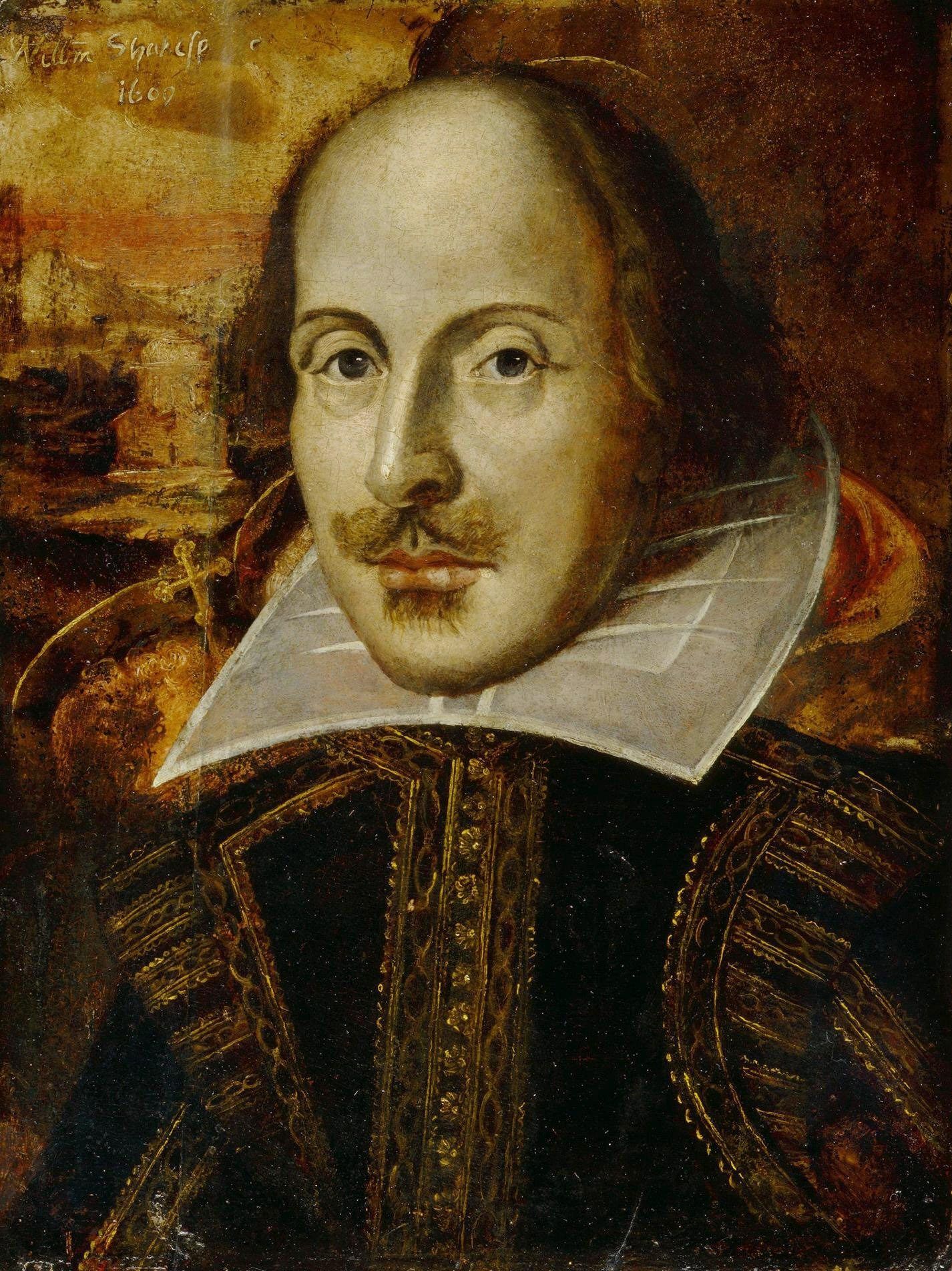
Short Stories: Travis, The Mean Sheriff, Mr. Maloney (though he gets his comeuppance), the crazy and unreliable male narrator


Advertising: MEN

War Poetry: MEN

The Sorrow of War: Kien and other Vietnamese MEN
 (This is Bao Ninh, the author, rather than Kien the character, just to clarify - there are three narrative voices in this text, one of which may possibly be his, or all of them... whatever you decide)
The Quiet American: Fowler and other white MEN

Regeneration: MEN

Hedda Gabler: Brack and other Norwegian MEN (eventually)

Death and the Maiden: Chilean MEN (to begin with and then eventually)

Poetry from Other Cultures: Korean fathers, Vietnamese patriarchy, white South African MEN, Jamaican MEN, Pakistani patriarchy
Macbeth: medieval Scottish MEN
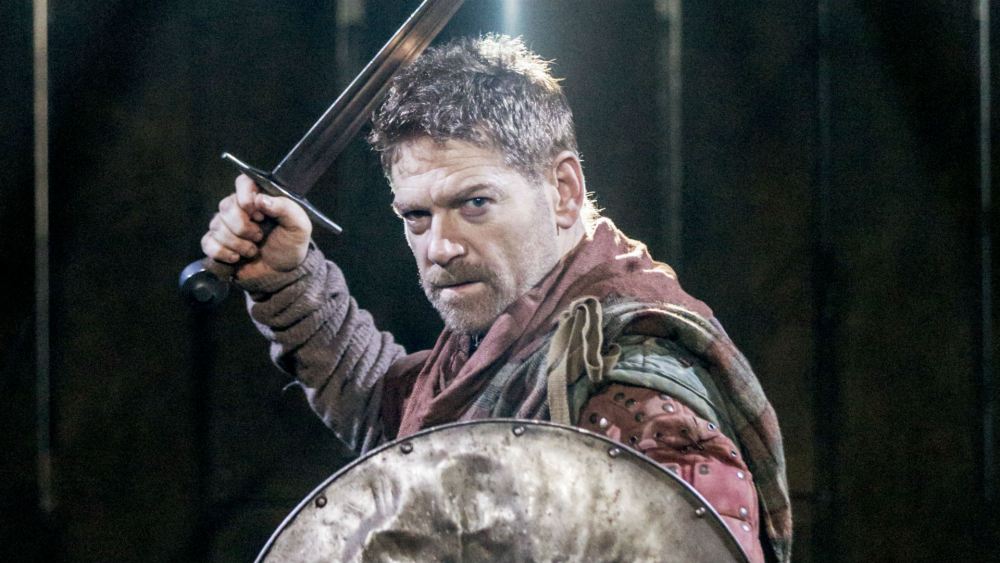
Romeo and Juliet: Lord Capulet, Lord Montague, Tybalt, Romeo


A Midsummer Night's Dream: Oberon, Theseus, Egeus

Of Mice and Men: the Boss and all the men who own/are mean to Curley's Wife

I'm the King of the Castle: Mr. Hooper

All My Sons: Joseph and Chris Keller

It is quite literally exhausting. It doesn't matter what time period I'm teaching, what country, what genre of text: Q: 'Who is in charge at this point?' A: 'The men!'
The only texts that buck the trend are the Cuban poem Mother and Holes, where the Warden is in charge. Thank goodness, even though she is mean and eventually outsmarted by a teenage boy. Let's take a moment to thank Sigourney Weaver, as the Warden, for being a heinous bitch and putting it out there for female authority:

That's right, Sigourney: deny them water. Deny those convicts water. They deserve it for being born part of the oppressive force. Deny them water in floral. Deny them with that braid. Abuse that new-woman power. They've got it coming to them.
Let's get back on track! I don't want to present an argument that suggests that there are no women in the texts I teach and that I don't spend hours and hours and hours of my life talking about women's issues like pregnancy and misogyny and objectification and female empowerment and maternal instincts and gender neutrality and taking on masculine traits and discussing why it's inappropriate to make lewd comments about the woman licking an ice cream in the Magnum advert. But check out that list of topics: any conversations that do focus on the significant women in the text - here they all are: Curley's Wife, Hedda, Paulina, Kate Keller, Annie, Mrs. Kingshaw, Lady Macbeth, Juliet, Helena, Hermia, Titania, Sarah Lumb, Mrs. Maloney - focus on how these women fit the social expectations of their time, or break out of them. Breaking out of them might make them 'in charge' temporarily, but by the end of the play./novel/poem/article/advert/film, this always ends badly (Hedda, Lady Macbeth, Juliet - suicide; Curley's Wife - death; Mrs. Kingshaw - loss of her son; Annie - broken engagement) or with the restoration of the patriarchy and a wedding/traumatic repression of voice. Regardless of any 'breaking out' that may be happening, the mere concept and need to 'break out' or 'rebel' or 'refuse to fulfil' necessitates that there is something in charge to 'break' or 'rebel against' or 'refuse', i.e. the patriarchy!
In the texts, I teach, the children look up, essentially, and what they see is male. And they know that it is good and right and proper and the Way Things Are.
Is this a curriculum issue, or is this society, or is this just me?
On the plus side: my job looks very cool when you put it into pictures like this, regardless of the gender of the protagonists.
Done. Thanks for reading.

No comments:
Post a Comment